Powering the AI Revolution: High-Density Racks for Australian Businesses
When prioritizing cloud computing, Australian enterprises must be strategic. As artificial intelligence transitions from experimental sandboxes to core enterprise production environments, Australian IT leaders face an unprecedented infrastructure challenge. The sheer computational force required to train large language models (LLMs), process deep learning algorithms, and manage massive datasets is pushing traditional data centre architectures beyond their operational limits. For CIOs and IT Directors, the focus has abruptly shifted from simple capacity planning to managing extreme power and thermal densities. At Amaze, we recognise that enabling this next generation of enterprise computing requires a fundamental rethinking of infrastructure design, starting with high-density racks.
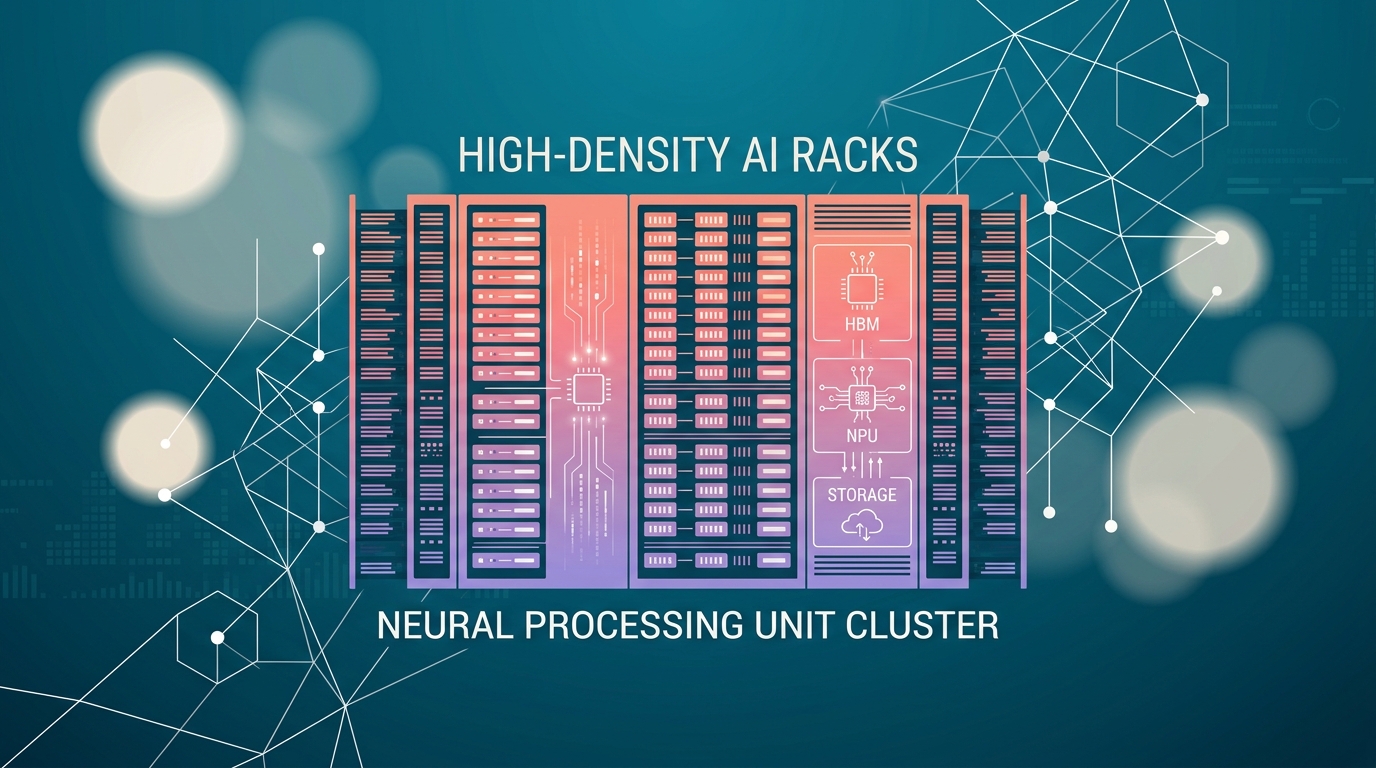
The AI revolution is not just a software paradigm shift; it is a hardware crucible. The latest generation of AI accelerators and enterprise-grade GPUs demands power footprints that were virtually unheard of a decade ago. Where a standard enterprise rack might historically consume between 5 kW and 10 kW, modern AI infrastructure routinely pushes power densities past 40 kW, 60 kW, and even up to 100 kW per rack. This exponential increase necessitates highly specialised environments. For Australian businesses looking to maintain a competitive edge, understanding and adopting high-density colocation solutions is no longer optional—it is a critical imperative for survival and growth. This underscores the absolute necessity of reliable cloud computing for ongoing operations.
The Strategic Value of Cloud Computing
To grasp the necessity of high-density infrastructure, one must examine the physics governing modern silicon. High-performance computing (HPC) clusters and AI training rigs are fundamentally designed to maximise data throughput and minimise latency. This requires packing as many compute nodes—specifically, dense GPU arrays—into the smallest physical footprint possible. The closer the processors, memory, and networking switches are physically located, the lower the latency across the fabric. However, this extreme consolidation of hardware creates two massive challenges: power provisioning and thermal extraction. This underscores the absolute necessity of reliable cloud computing for ongoing operations.
When enterprise racks cross the threshold of 30 kW per rack, traditional air-cooling methodologies begin to fail. The specific heat capacity of air is simply insufficient to extract the thermal load generated by tightly packed silicon operating at maximum utilisation. Without adequate cooling, processors engage in thermal throttling—automatically reducing clock speeds to prevent catastrophic hardware failure. This throttling negates the massive capital expenditure invested in high-performance hardware, artificially capping the ROI of AI initiatives. Overcoming this requires sophisticated high density colocation Australia facilities engineered specifically for these workloads.
Implementing Cloud Computing for Enterprise Growth
Managing the thermal exhaust of a 60 kW rack requires abandoning legacy computer room air conditioning (CRAC) units relying on cold aisle/hot aisle containment alone. High-density deployments demand liquid cooling technologies. Water possesses a heat capacity approximately 3,200 times greater than air by volume, making it the only viable medium for next-generation thermal management.
At Amaze, our infrastructure design integrates advanced thermal management systems to ensure optimal Power Usage Effectiveness (PUE) even under maximum load. We deploy several tiers of high-density cooling:
- Rear Door Heat Exchangers (RDHx): These systems replace the standard rear door of a server rack with a liquid-cooled radiator. As server fans push hot exhaust air out of the chassis, it passes through the chilled coils, neutralising the heat before it enters the data hall. This allows for rack densities up to 50 kW without impacting ambient facility temperatures.
- Direct-to-Chip (D2C) Liquid Cooling: Also known as liquid-to-chip, this methodology brings micro-channeled cold plates directly into contact with the CPU and GPU dies. Dielectric fluids or treated water circulate over the processors, capturing heat at the source. This is essential for the latest AI hardware architectures and supports densities exceeding 80 kW per rack.
- Immersion Cooling: The bleeding edge of thermal management involves submerging entire server chassis in engineered, non-conductive dielectric fluids. This guarantees total thermal capture and eliminates the need for server fans entirely, drastically reducing the facility's overall mechanical PUE.
Legacy Infrastructure vs. High-Density Colocation
To clearly illustrate the operational divide between traditional environments and purpose-built AI infrastructure, we must compare their core architectural capabilities. Attempting to force-fit AI workloads into legacy environments inevitably leads to stranded capacity, where space is available but power and cooling are exhausted.
| Architectural Metric |
Legacy Data Centre Infrastructure |
Amaze High-Density Colocation |
| Average Power per Rack |
4 kW – 10 kW |
30 kW – 100+ kW |
| Cooling Methodology |
Air cooling (CRAC/CRAH), raised floors, basic aisle containment |
Rear Door Heat Exchangers (RDHx), Direct-to-Chip, Immersion cooling |
| Power Distribution |
Standard 3-phase 32A feeds |
High-amperage, intelligent busways with heavy-duty 3-phase circuits (63A+) |
| Target PUE |
1.5 to 2.0 (Inefficient at high loads) |
1.1 to 1.3 (Highly efficient even at peak thermal loads) |
| Floor Load Bearing |
Standard commercial thresholds (approx. 500-750 kg/sqm) |
Reinforced slab floors supporting high-density heavyweight racks (1,500+ kg/sqm) |
| Network Fabric |
Standard 10G/40G Top-of-Rack |
Non-blocking 400G/800G Infiniband and Ethernet fabrics for low-latency AI clusters |
The Intersection of High-Density Racks and Cloud Computing
The deployment of high-density infrastructure is intimately tied to the broader evolution of cloud computing and Infrastructure as a Service (IaaS). For many Australian enterprises, building and maintaining proprietary high-density data centres is financially prohibitive and operationally complex. The capital expenditure required to retrofit facilities with advanced liquid cooling loops, high-amperage busways, and reinforced structural flooring is immense. This is where premium colocation and IaaS providers bridge the gap.
By leveraging Amaze’s high-density colocation, businesses can treat AI hardware deployment as an operational expense rather than a massive capital sink. Furthermore, hybrid cloud architectures allow organisations to house their proprietary AI inference hardware within our high-density racks while seamlessly connecting to our scalable IaaS platforms for general compute and storage needs. This hybrid approach ensures that mission-critical, data-heavy AI workloads remain performant, secure, and sovereign within Australia, without sacrificing the elasticity of the cloud.
In a true IaaS ecosystem, high-density colocation acts as the physical bedrock. It provides the uncompromising power and thermal stability required by the hardware, while the logical cloud layer provides the agility and software-defined networking necessary to orchestrate complex machine learning pipelines. Whether you are deploying bare-metal Kubernetes clusters for AI training or running vast data lakes, the underlying high-density environment dictates the ultimate performance ceiling of your architecture.
Addressing the Power Availability Crisis
A critical, often overlooked aspect of the AI boom is grid-level power availability. Across Australia, securing multi-megawatt data centre footprints is becoming increasingly difficult as the national grid navigates the transition to renewable energy sources. Standard enterprise facilities often lack the necessary utility feeds or substation capacity to support a sudden influx of 60 kW racks.
High density colocation Australia providers must proactively secure and manage massive power reserves. At Amaze, our infrastructure strategy includes deep integration with grid operators and substantial investments in redundant power trains. From the high-voltage utility feeds down to the intelligent Power Distribution Units (PDUs) at the rack level, every component is engineered to deliver clean, uninterrupted power to highly sensitive GPU clusters. Furthermore, by achieving exceptionally low PUE through advanced liquid cooling, we ensure that the maximum possible percentage of utility power is delivered directly to the compute hardware, rather than being wasted on inefficient mechanical cooling overhead.
The Amaze Guarantee: Future-Proofing Australian Enterprise
Preparing for the next decade of enterprise IT requires acknowledging that the demands of AI will only intensify. Future generations of silicon will continue to push the boundaries of thermal design power (TDP). Australian businesses need an infrastructure partner capable of scaling alongside their most ambitious technological roadmaps.
Amaze delivers the robust, high-density environments required to power the AI revolution. We combine uncompromising electrical engineering, advanced thermodynamic management, and deeply integrated IaaS capabilities to provide a holistic foundation for your most critical workloads. By eliminating the constraints of power and cooling, we empower your data science and engineering teams to push the limits of what is possible, driving genuine innovation and competitive advantage.
Frequently Asked Questions
What exactly is meant by "high density colocation Australia" in the context of AI?
In the context of AI, high-density colocation refers to data centre facilities specifically engineered to support racks drawing significantly more power than standard enterprise deployments. While a traditional rack uses 5-10 kW, high-density environments support workloads ranging from 30 kW to over 100 kW per rack. This requires specialised high-amperage power distribution, reinforced floor loading to support heavy GPU arrays, and advanced thermal management systems like liquid-to-chip cooling, all delivered within secure Australian facilities to maintain data sovereignty.
How does thermal throttling impact my AI workload ROI, and how do high-density racks prevent it?
Thermal throttling occurs when CPUs or GPUs exceed safe operating temperatures, prompting the hardware's firmware to automatically reduce clock speeds to prevent physical damage. If you deploy expensive AI accelerators in a legacy data centre lacking adequate cooling, they will chronically throttle under heavy load. This means your hardware operates at a fraction of its intended performance, crippling the Return on Investment (ROI) of your AI initiatives. High-density racks at Amaze utilise advanced cooling methodologies—such as rear door heat exchangers or direct-to-chip liquid cooling—to aggressively extract heat, ensuring processors run at maximum boost clocks continuously without throttling.
Can we integrate our high-density AI hardware with existing cloud computing and IaaS environments?
Absolutely. Modern enterprise architecture relies heavily on hybrid models. You can deploy your bespoke, bare-metal AI training hardware within Amaze's high-density colocation racks while establishing low-latency, private cross-connects to our robust IaaS and cloud computing platforms. This allows you to leverage the extreme compute power of your private hardware for intensive AI workloads, while utilising the elasticity of IaaS for standard application hosting, data ingestion, and scalable storage—creating a seamless, high-performance hybrid ecosystem.
Why is Power Usage Effectiveness (PUE) important when deploying 50kW+ racks?
Power Usage Effectiveness (PUE) is the ratio of total facility power consumed to the power delivered directly to IT equipment. A lower PUE indicates a more efficient facility. When you are deploying extremely power-hungry AI racks (e.g., 50kW+), a poor PUE means you are paying a massive premium for the electricity required just to run the air conditioning systems. By utilising advanced liquid cooling technologies, Amaze drastically lowers the mechanical overhead required for heat rejection, resulting in an exceptional PUE. This directly translates to significantly lower operational expenditure (OpEx) for your business and a more sustainable IT footprint.